
Tennis Elbow Physiotherapy
Struggling with Tennis Elbow?
Pain around your arms and elbows can be common, especially after increased use. Although often it will resolve with time; it can persist, interfering with your day to day life and getting worse if not treated properly.
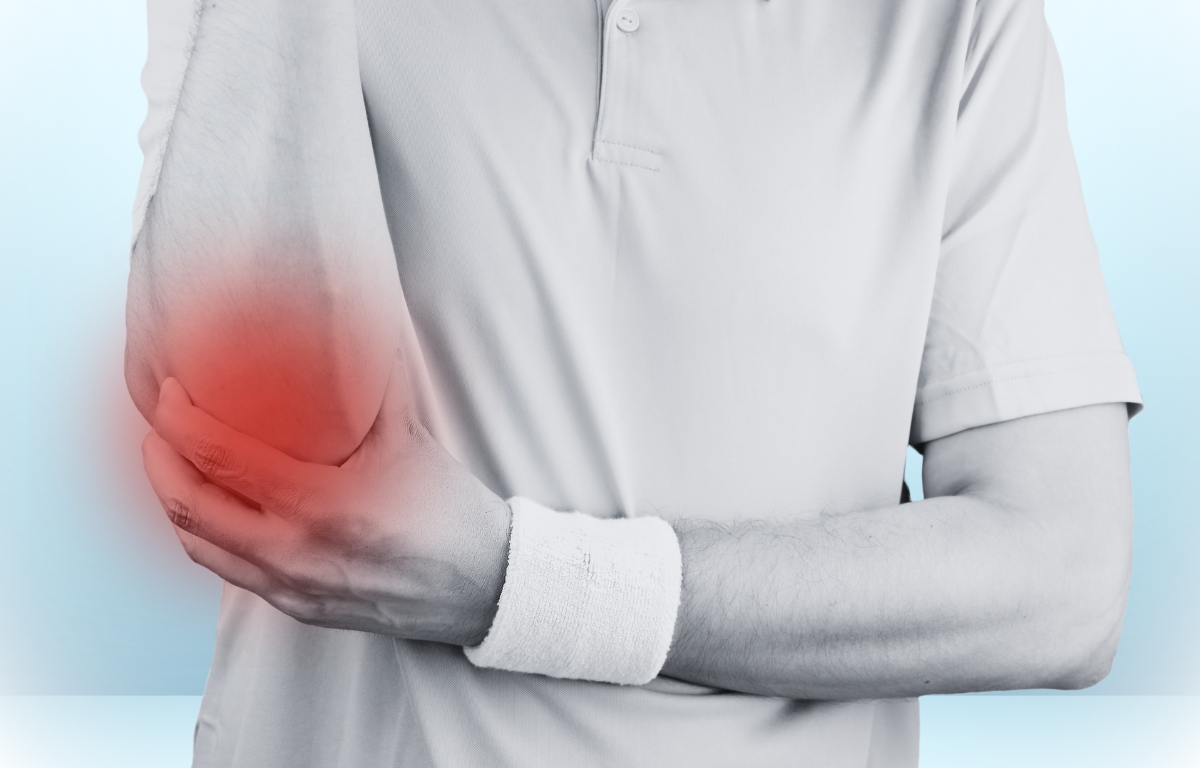
One of these conditions is Lateral Epicondylitis, commonly called ‘Tennis Elbow’, where pain or burning is felt on the outside of your elbow, while doing everyday activities such as:
- Gripping
- Lifting
- Twisting
Tennis elbow can lead to chronic pain that can significantly affect your quality of life, and leave you with a reduced ability to do certain tasks.
Thankfully, tennis elbow can be treated by Physiotherapists experienced at dealing with the condition.
Read on to discover our approach to physiotherapy for Tennis Elbow.
What is Lateral Epicondylitis (Tennis Elbow)?
Tennis elbow, the more common term for Lateral Epicondylitis, is a result of overuse of the muscles and tendons in the forearm. This causes minor tears and inflammation in the ECRB tendon, short for extensor carpi radialis brevis, an important tendon that extends from your elbow to your wrist.
The main cause is repetitive strenuous activities that load the tendon. This can be repetitive lifting, twisting or gripping (eg during racquet sports like the name suggests). While it isn’t considered a strenuous activity to most people, even typing can lead to tennis elbow due to the repetition.
This leads to pain and tenderness usually just below the bony part of the outer elbow.


BEST PHYSIO I HAVE EVER HAD. I was recommended to see Callum by a friend of mine and I would recommend him to anyone I know. I have now seen four physios in total and Callum is by far the best. Callum has taken me from a mere feeble man with a VERY unstable knee and turned me into a strong, confident man who is now doing all the activities I wanted to do. I am now dancing, running, going to the gym, playing golf and doing all the things I was not able to do before. I know this sounds farfetched but I don’t think there is something Callum can’t do. After giving me this strength in my knee, I think he might even be able to walk on water. Recover physio has found an absolute diamond in Callum and I do hope others can feel the same appreciation I have for him. Thank you very much. All the best!

Worked with Henry to recover from my tennis elbow and shin splints injuries for the last few months and safe to say I’m almost back to my best, very warm and never left me feeling confused about my progress. Very good physiotherapy service
More Information
Opening Hours
- Monday8am – 8pm
- Tuesday8am – 5pm
- Wednesday8am – 8pm
- Thursday8am – 8pm
- Friday8am – 5pm
- Saturday9am – 1pm
- SundayCLOSED
Who can get Tennis Elbow
The condition is most common in people aged 30-50 and can be exacerbated by age-related factors such as worsening blood flow and degeneration over time due to health or lifestyle factors.
Symptoms of Tennis Elbow
Common symptoms of tennis elbow can include:
- Pain during movements similar to the activity that caused the overload such as lifting, twisting or gripping tasks.
- Continuous pain that restricts all activity in the elbow
- The pain worsens and spreads to other areas of the arm
- Weakness in muscles in your wrist, fingers, forearms, or shoulders, leading to difficulty gripping and carrying objects.
Common causes of Tennis Elbow
As the name implies, playing tennis and other racquet sports can be the cause, but it is less common due to the improved designs of the equipment. It can occur with other sports such as swimming, but can also be an occupational injury among gardeners, carpenters, and electricians.
It can also happen due to your set up of your work station and/or how you use your mouse and keyboard. Anything that involves repetitive strain in that tendon can be susceptible to tennis elbow, so keep an eye out for stubborn pain in that area.
How Physiotherapy Treats Tennis Elbow
An experienced Physiotherapist trained in treating tennis elbow can provide the following:
- Treatment to reduce the muscle tone in the forearms to relieve the tension on the tendon
- Assessment of the painful movements and recommendations of adaptations
- Specific strengthening exercises for any areas of weakness that may be exacerbating the problem
- An individualised home exercise programme for you to continue the correct treatment yourself at home
In our experience, each case is unique as the cause is often multifactorial, and without professional assessment, you risk worsening your condition. Your Physiotherapist at Recover will tailor a treatment plan to your specific needs, ensuring exercises are introduced at the right time and performed correctly to avoid further strain.
Home advice for Tennis Elbow
If you think you are suffering from tennis elbow, there are things that you can do at home which are helpful for most types of pain and inflammation regardless of the type of injury. For a proper tennis elbow diagnosis, please consult a professional before starting more specialised treatment.
For general pain and inflammation, the following can help ease symptoms:
- Offload – stop or reduce the movements that cause the symptoms if possible
- Contrast applying an ice pack for 1 minute with a heat pack for 2 minutes and repeating 6 times. This can help to reduce the swelling and decreasing pain.
- Anti-inflammatory medication (please check with your GP before taking any medication)
How Recover Physiotherapy Can Help
At Recover Physio, we prioritise a personalised approach to your recovery from the very start. During your initial consultation, our expert physiotherapists conduct a thorough assessment to understand your condition, lifestyle and goals, which allows us to tailor a treatment plan specifically for you, addressing your needs and ensuring optimal outcomes.
We focus on providing targeted care, customised exercises prescription to promote effective and efficient recovery.
Depending on what we find during our assessment, physiotherapy for tennis elbow can involve the following modes of treatment:
- Using a counterforce brace to offload the strain on the tendon by redistributing pressure away from the affected area
- Contrast therapy: alternating between applications of heat and ice to reduce inflammation and improve blood flow
- Soft tissue techniques like dry needling therapy, massage or deep transverse friction techniques to help tendons get unstuck and start healing
- A programme specifically for your condition involving techniques to decrease the muscle tone and functional exercises to address any weaknesses.
- General education on better movement in order not to worsen or repeat the injury when engaging in the activity that caused it.
Find Your Nearest Recover Physio Clinic
Recover Physio proudly provides expert physiotherapy services in Norwich. With two convenient locations in the city centre on Princes Street and at The Nest just off Holt Road, we are committed to serving the Norfolk community.
Princes Street, Norwich City Centre
Our Princes Street clinic is the flagship clinic of Recover Physio, situated in the heart of Norwich city centre in Tombland.
The Nest, Holt Road - Norwich North
Our clinic at The Nest serves customers in Norwich and surrounding areas of North Norwich and Norfolk.
If you’d like to book an initial tennis elbow consultation, you can book online at our Princes Street clinic in Norwich, Norfolk, or our clinic at The Nest, Holt Road, Norwich.
Frequently Asked Questions
Does physiotherapy work for tennis elbow?
Yes, physiotherapy is a highly effective treatment for tennis elbow. A physiotherapist will conduct a thorough assessment to find the root cause of your pain. Treatment typically involves a combination of hands-on techniques to relieve tension , specific strengthening exercises, and a personalised home exercise programme to ensure a full recovery.
How long does it take for tennis elbow to heal with physiotherapy?
Recovery time varies significantly depending on the individual, the severity of the condition, and how long you’ve had the symptoms. While some people feel relief within a few weeks, more chronic cases can take several months to resolve fully. Your physiotherapist will provide a more accurate prognosis after your initial assessment.
What is the fastest way to cure tennis elbow?
The fastest route to recovery is a combination of early, accurate diagnosis and a consistent, tailored treatment plan. This involves managing the load on the tendon (reducing painful activities), alongside professional physiotherapy. A targeted programme of ‘hands-on’ treatment and specific rehabilitation exercises is the most effective way to treat the condition and prevent it from returning.
Is it better to rest or exercise tennis elbow?
This requires a balance of both, which we call “relative rest”. You should stop or reduce the specific activities that cause the pain (offloading). However, complete rest is not the solution; the tendon needs specific, progressive strengthening exercises to heal properly and build resilience. Your physiotherapist will prescribe the correct exercises for you to perform at the right time to avoid further strain.