
Mon, Wed & Thu
8am - 8pm
Tue & Fri
8am - 5pm
Sat
9am - 1pm

Running is a demanding pursuit that places significant stress on the body, yet many of us simply lace up and head out without ever checking if our “engine” is properly aligned.

Whether you are aiming for a personal best or simply want to enjoy the Norfolk countryside without knee pain, a professional running assessment is the most effective way to understand your unique movement patterns. At Recover Physio, we don’t just look at how you run; we look at why you move the way you do.

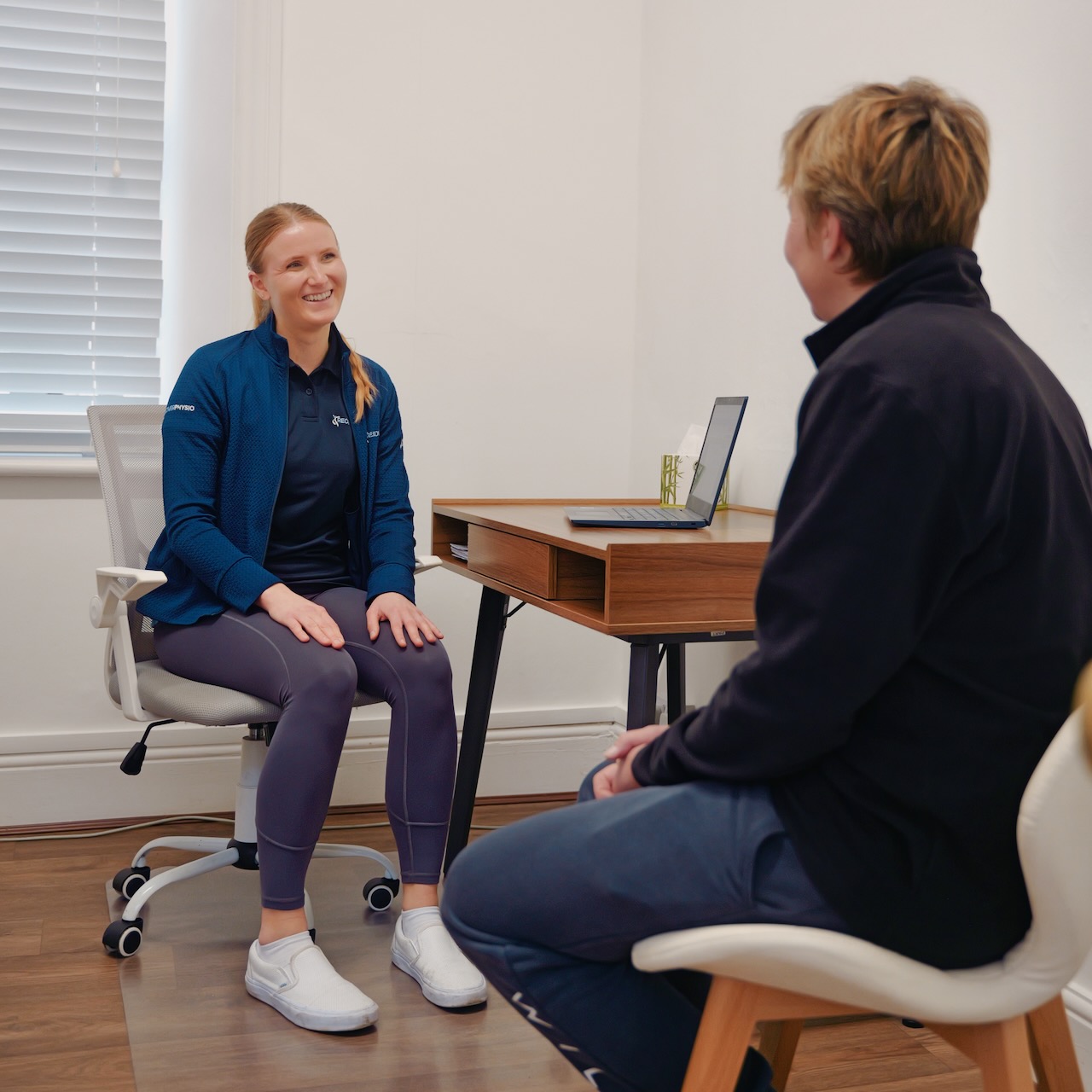
Lindsey conducts a running assessment at Recover Physio in Norwich

What Happens During a Running Assessment?

There is a common misconception that a running analysis is just about watching someone run on a treadmill. While the treadmill is a vital tool as part of a gait analysis, a truly comprehensive review starts before you even step on it.

  1. Range of motion & mobility: We begin by assessing the flexibility of your key running joints—the hips, knees, and ankles. Any restriction here can force your body to compensate elsewhere, often leading to injury. 
  2. Strength assessment: Using a precision dynamometer, we measure the force your muscles can produce. This allows us to identify asymmetries (where one side is weaker than the other) and evaluate strength ratios that are vital for injury prevention. 
  3. Biomechanical review: We perform a detailed movement analysis to see how your body handles load.
  4. Treadmill gait analysis: Finally, we capture your running form on camera. This allows us to break down your stride, looking at foot strike, cadence, and pelvic stability in real-time.

A Roadmap For Your Running Goals

Following your session, you won’t just be left with a list of problems. You will receive a detailed report of our findings, alongside a bespoke injury prevention routine. If we identify specific movement issues, we will develop a corrective biomechanics plan tailored to your lifestyle and training schedule.

We will also guide you on how to apply  any other findings to your running. This may include targeted strength work and recommendations on how to adjust and progress your training safely. The aim is to give you a clear and practical plan so you can continue improving your running while reducing the risk of future injuries.

Gait Analysis at Recover Physio

At Recover Physiotherapy, we use Ochy, a cutting-edge AI gait analysis tool, to transform how we understand your running mechanics. Using a camera, we record you running at your natural pace. Our software identifies your unique movement patterns by tracking key anatomical points in real-time.

Our therapists then deep-dive into this data to scrutinise your strike pattern, vertical oscillation, and joint angles. By pinpointing these subtle biomechanical inefficiencies, we can identify the root cause of persistent injuries like runner’s knee or ITB syndrome. We then use these objective insights to build a bespoke strength and technique roadmap, helping you to build strength and resilience.

Why Choose Recover Physio in Norwich?

Our therapists are trained in our systematic approach to find the root cause of your injury, rather than simply treating symptoms. This allows us to create tailored treatment rehabilitation programs that are bespoke and designed to support long-term recovery and help you return to running with confidence.

With two convenient locations in Norwich, at our flagship Princes Street clinic in the city centre and our specialised sports facility at The Nest. We offer the ideal environment for performance optimisation or injury recovery. At The Nest, we even offer the unique opportunity to use outdoor grass and 3G pitches for full-speed rehabilitation where appropriate, helping you transition safely back to running.

Book Now or Speak to a Therapist

To book your running assessment, please use our online booking system. Select “Running Assessment” from our list of services, select an appointment time to suit you at one of our clinics, and confirm your booking with a payment.

If you’re unsure whether a running analysis session is right for you, you can speak to one of our friendly therapists. Just click below to request a callback from a member of our team or send us a message.

Find Your Nearest Branch


Norwich City Centre

Our Princes Street clinic is the flagship clinic of Recover Physio, situated in the heart of Norwich city centre in Tombland.

The Nest, Holt Road

Our clinic at The Nest serves customers in Norwich and surrounding areas of North Norwich and Norfolk.

Join Hundreds of Happy Clients


What can a gait analysis tell you?

A gait analysis reveals the intricacies of your running mechanics, identifying inefficient movement patterns or “energy leaks” that could lead to injury. By capturing your stride on camera, we can pinpoint specific issues like over striding, pelvic instability, or poor foot strike that are difficult to see with the naked eye. This information allows us to provide tailored advice and exercises to improve your running technique.

Ultimately, a gait analysis can help enhance running efficiency, reduce the risk of common injuries, and support safer progression in your training so you can run more comfortably and perform at your very best.

Is running analysis worth it?

Running analysis transforms your running training from a guessing game into a data-driven strategy for both performance and pain prevention. Investing in an assessment helps you avoid the cycle of recurring “niggles” and ensures your training volume is supported by a body that moves efficiently.

It also provides practical, personalised guidance that you can immediately apply to your training. By understanding how your body moves when you run, adjustments to technique, strength, and training load can be made to improve efficiency and reduce unnecessary strain on joints and muscles. Over time, this can help you build greater resilience, run more comfortably, and progress towards your performance goals with greater confidence.

What should I look for in a running analysis?

Look for a comprehensive session that goes beyond just the treadmill. A high-quality analysis must include objective strength testing and mobility screening to understand why you move the way you do. We believe it should conclude with a clear, actionable plan, including a corrective biomechanics strategy and a bespoke exercise routine, to help you achieve your running goals.